
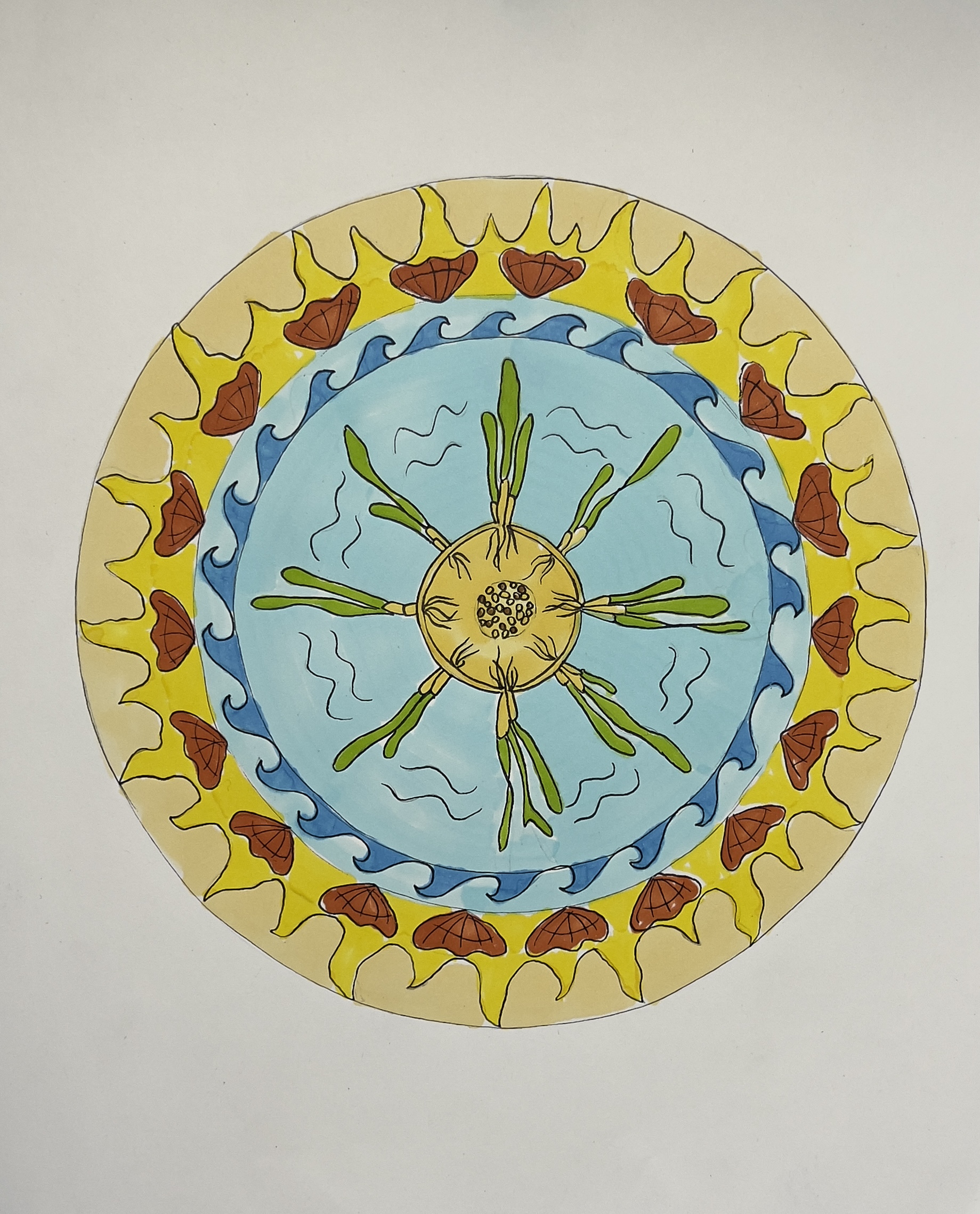
Ocean Mandala

The ocean is a major actor within climate science because it quietly regulates the systems that make life on Earth possible. It generates about 50% of the oxygen we breathe, absorbs nearly 30% of global carbon dioxide emissions, and captures around 90% of the excess heat caused by greenhouse gases. In many ways, it acts as both the “lungs” of the planet and its largest carbon sink. However, increasing emissions are warming and acidifying seawater, reducing the ocean’s ability to absorb carbon dioxide and protect ecosystems. If the ocean were not absorbing this excess heat and CO₂, atmospheric temperatures would be rising at a much faster and more dangerous rate. This is not a distant issue, it is directly connected to coastal communities like ours here in New Jersey.

My mandala artwork is inspired by the structure and systems of seagrass meadows. Using the form of the seagrass leaves, I illustrated these underwater ecosystems into a circular form that represents the system of how seagrass combat and absorb CO₂. The materials and organic lines reflect the fluid movement of water, and the repetition of elements emphasizes the idea of systems working together. The mandala mirrors how seagrass spreads through thick rhizomes beneath the sediment, forming networks that stabilize ecosystems. The circular form of the mandala symbolizes the carbon cycle and the ocean’s continuous exchange of heat, and carbon dioxide. Through this piece, I show that even delicate, often overlooked plants like seagrass play a powerful role in sustaining our ecosystem.
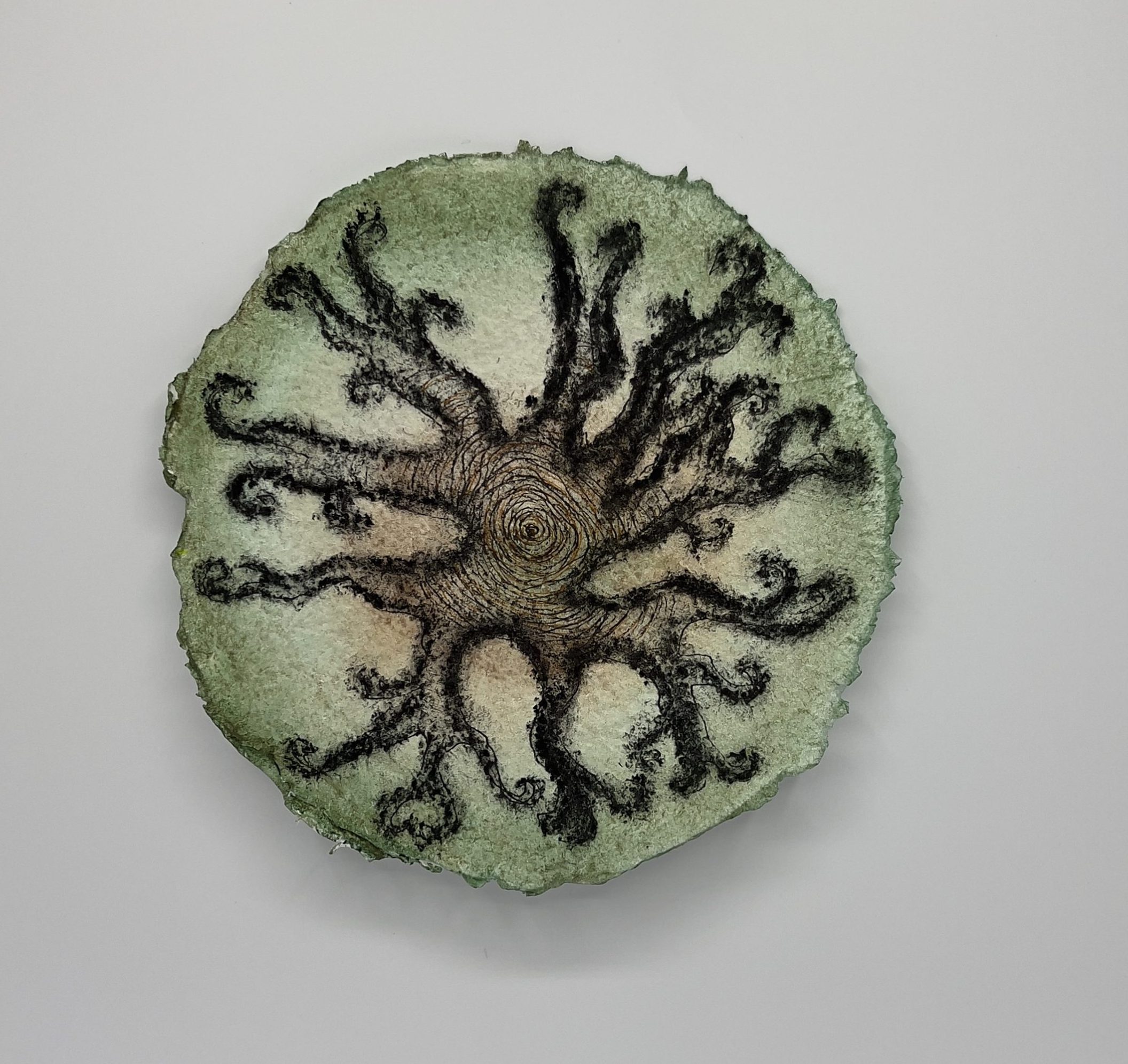

Forest Mandala

This eco-friendly mandala sketch was inspired by research supported by the United Nations, studying the ways in which global climate crises specifically affect our forests. Forests expand over 30% of Earth’s land surface, making a home for over 75% of land-living species, overall supporting 25% of humanity. More importantly, trees, the foundation of Earth’s forests, are one of the greatest natural ‘weapons’ to fight climate change. However, with mass levels of deforestation, caused both by climate change and human negligence, their role falls under threat.

Made with natural watercolor paints and homemade charcoal sticks, I composed this mandala on resourced watercolor paper. The particular pigments in the piece were derived from land of the Earth: bohemian green and dark red Moroccan ochre, and the charcoal sticks were a gift, carefully crafted from burning willow vines. Ergo, not only are these materials eco-friendly, but purposeful to this piece. I wanted to use Earth-found pigments simply to illustrate the natural colors of our planet’s forests and grounds. The use of charcoal was more deliberate, in which I wanted to convey the burning, ashy crisis of deforestation by forest fires, what better way than using a burnt piece of wood.

Spirals and Systems are important Eco Art aesthetics, so I highlighted them in the mandala. Branching from the center of the mandala is a spiraling tree root. Spirals can be subsequently seen as a matter of growth and evolution, as illustrated in the tree rings within the central ‘trunk.’ As for systems, the forest and even a tree in itself are considerable systems. Ultimately, this piece, along with its materials and aesthetics reflect both the fragility and resilience of Earth’s forests.

For more information, click here.

https://www.un.org/en/climatechange/science/climate-issues/forests

Facebook
Instagram