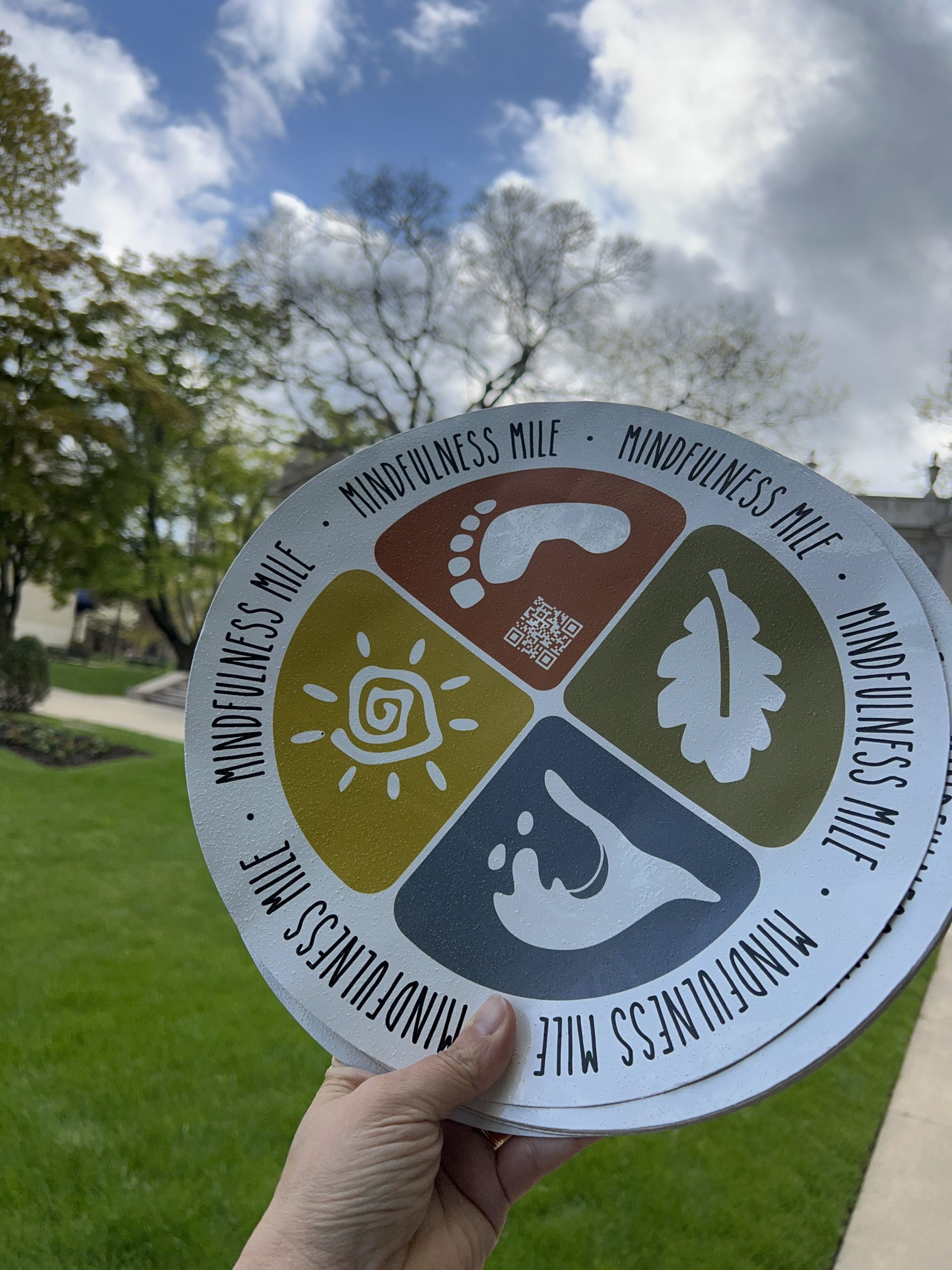
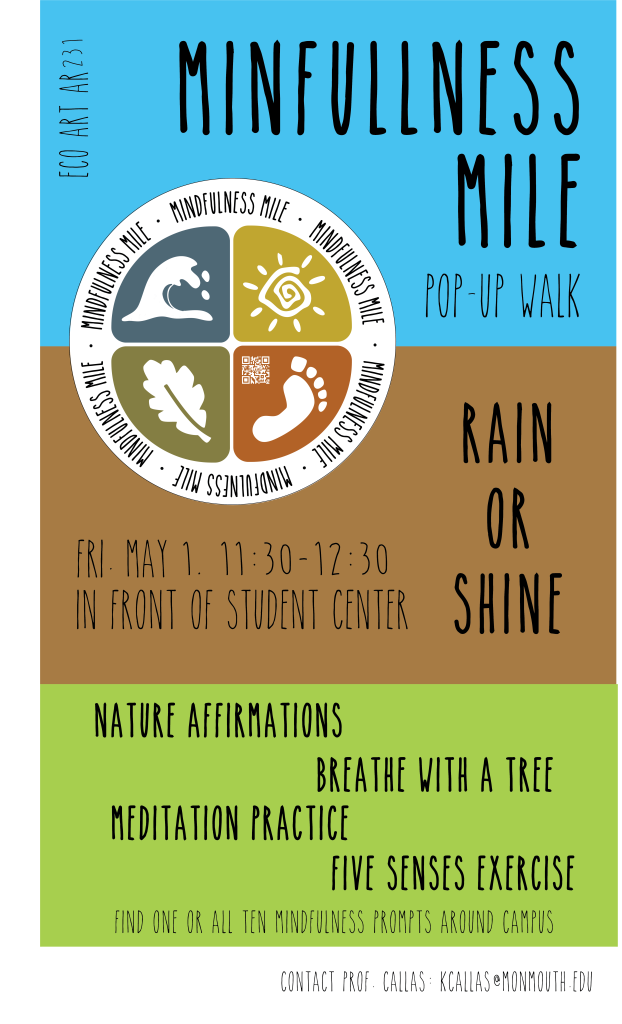
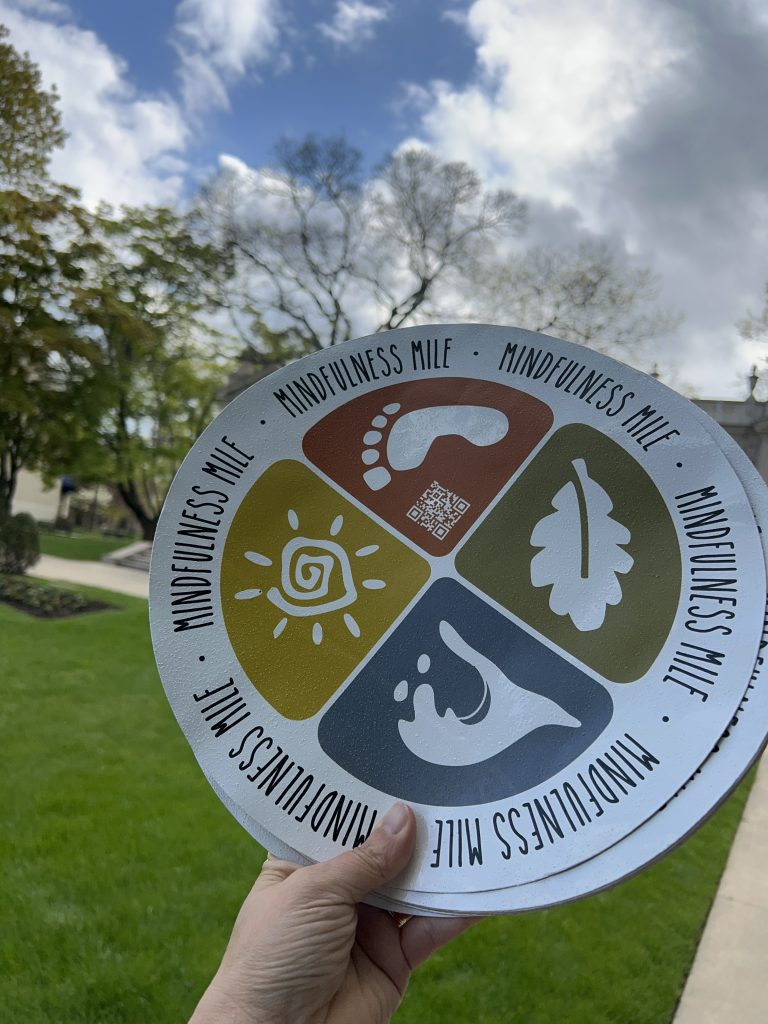
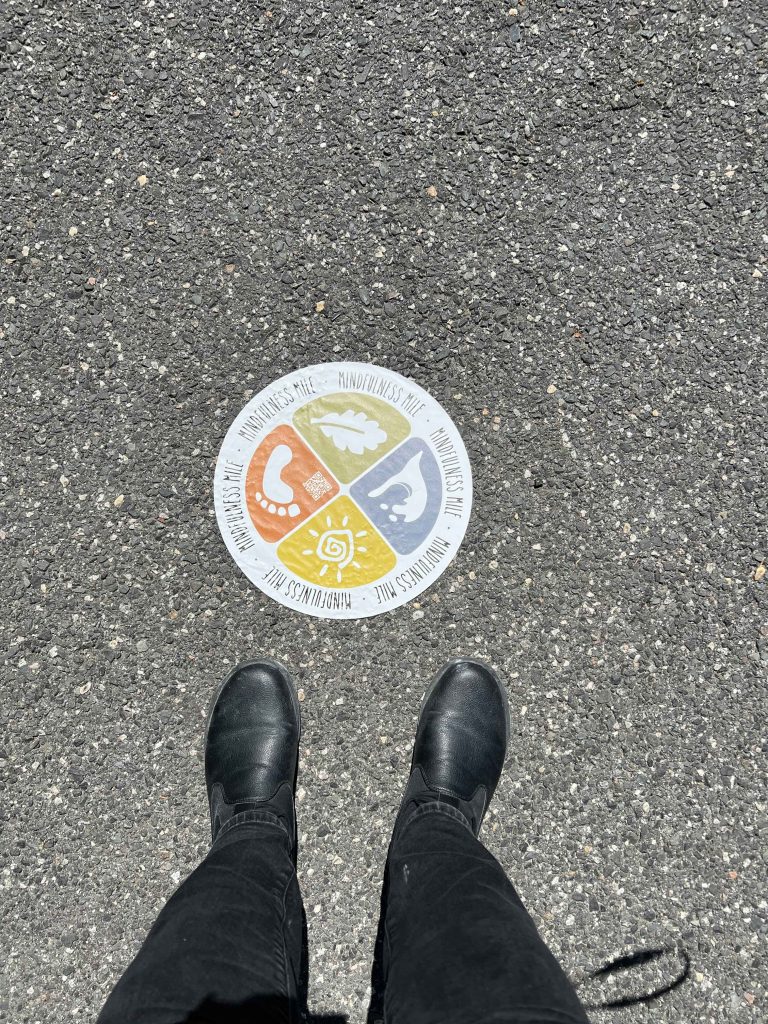
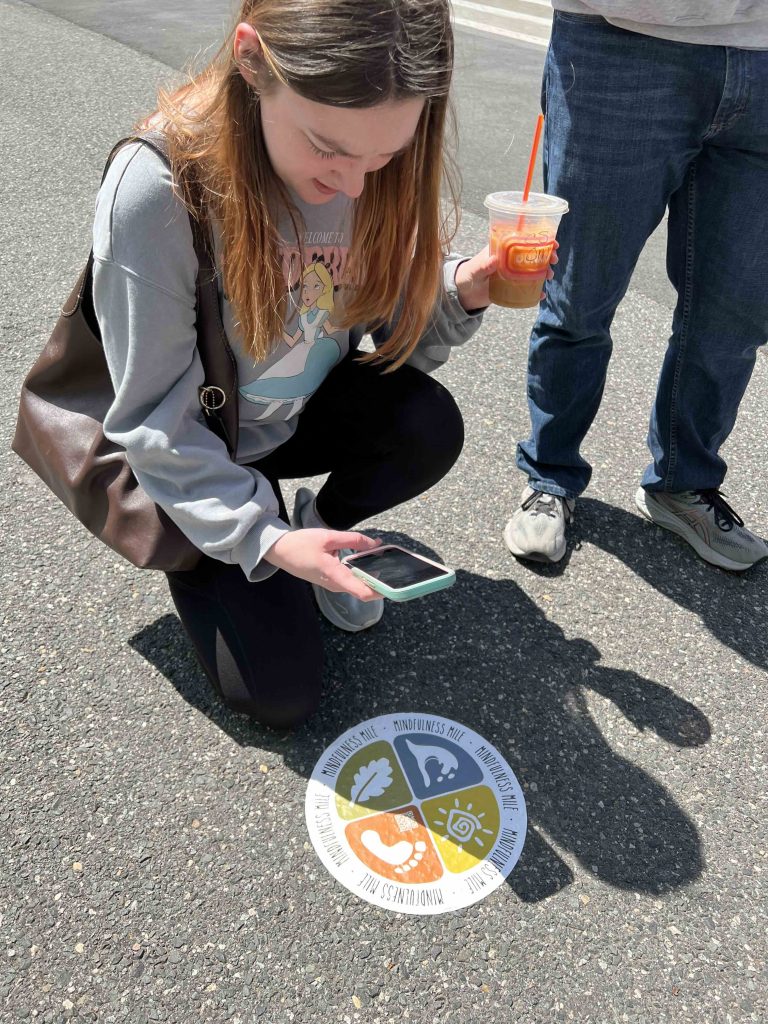
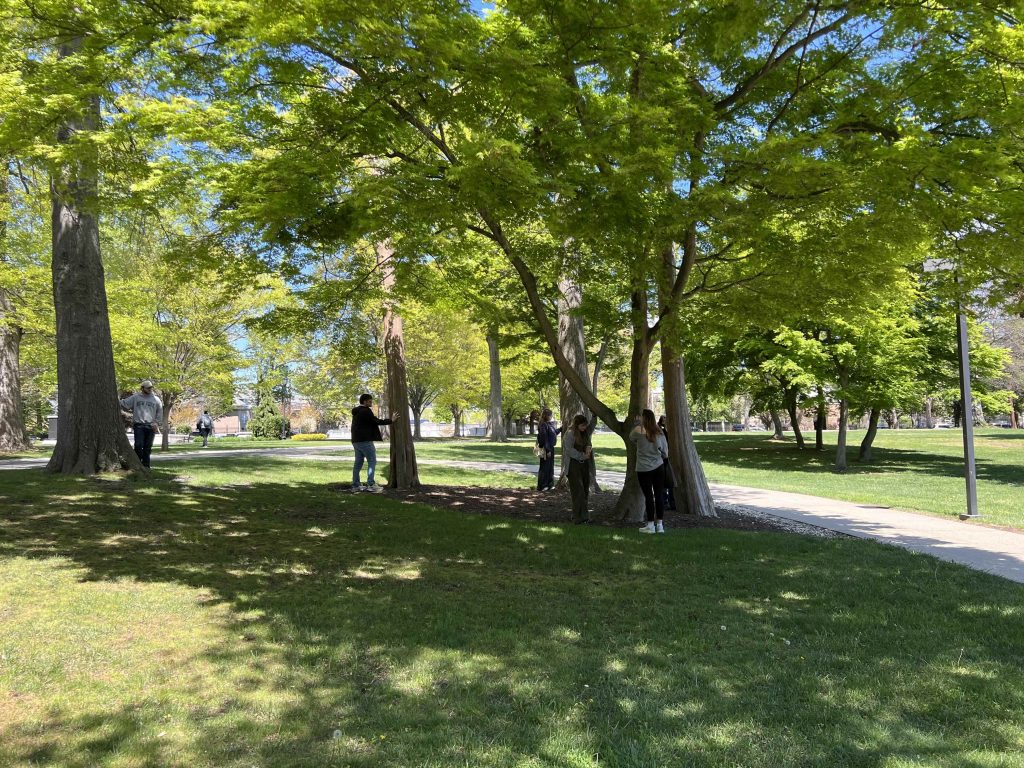
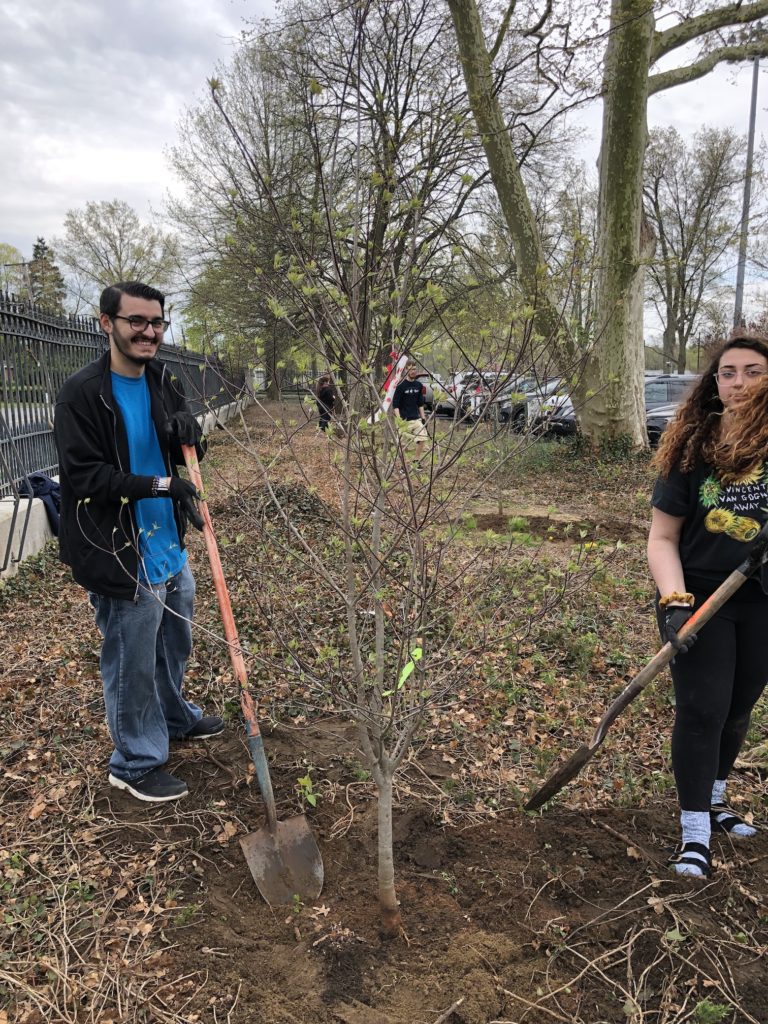
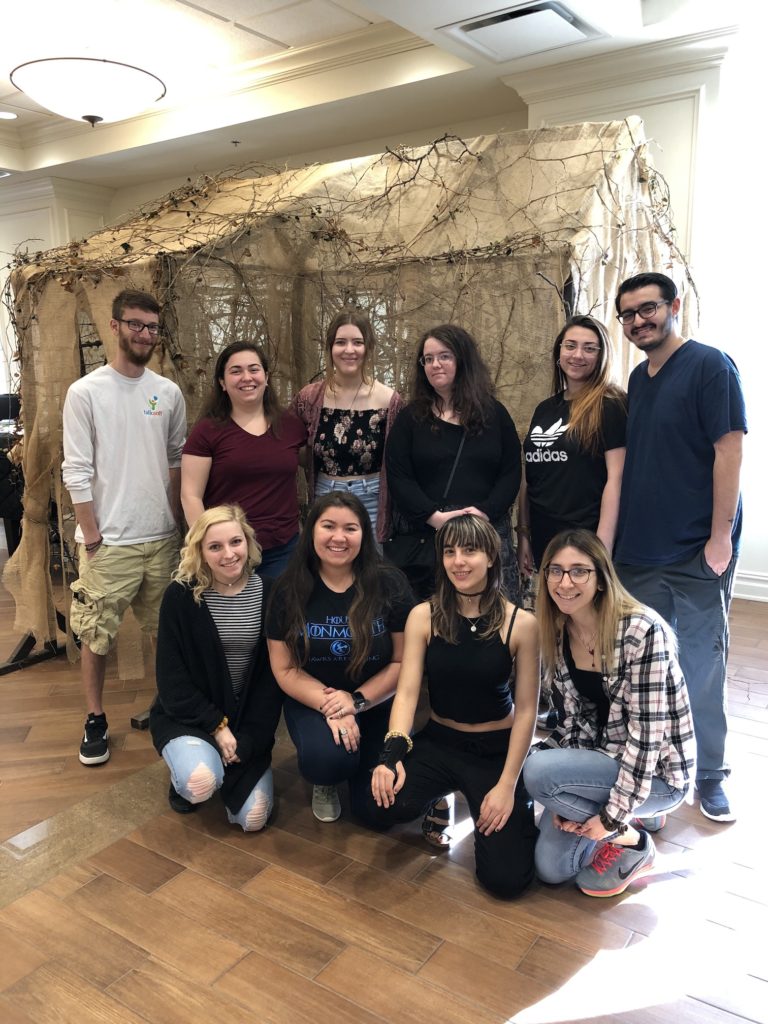
On May 1st, Eco Art and Dr. Delaney, the Urban Coast Institute Eco-Psychologist in Residence, led a Mindfulness Mile Pop Up Walk. The walk followed a mile long loop around the Monmouth University Campus. Sidewalk stickers marked ten stops that each had a designated mindfulness prompt.
The idea is to test out the mile and the prompts for a more official mile to be created later with other types of signage and changing prompts.
The ocean is a major actor within climate science because it quietly regulates the systems that make life on Earth possible. It generates about 50% of the oxygen we breathe, absorbs nearly 30% of global carbon dioxide emissions, and captures around 90% of the excess heat caused by greenhouse gases. In many ways, it acts as both the “lungs” of the planet and its largest carbon sink. However, increasing emissions are warming and acidifying seawater, reducing the ocean’s ability to absorb carbon dioxide and protect ecosystems. If the ocean were not absorbing this excess heat and CO₂, atmospheric temperatures would be rising at a much faster and more dangerous rate. This is not a distant issue, it is directly connected to coastal communities like ours here in New Jersey.
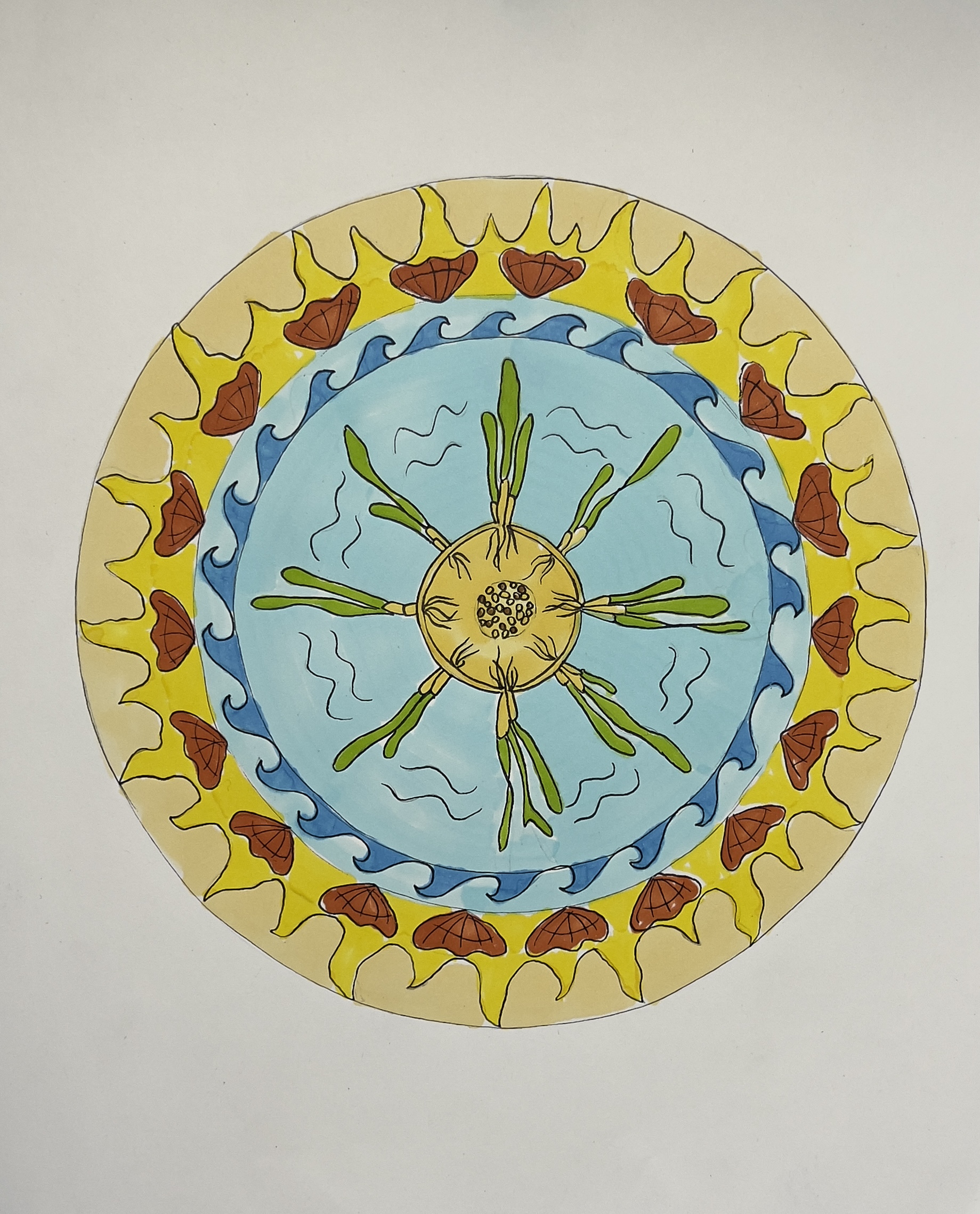
My mandala artwork is inspired by the structure and systems of seagrass meadows. Using the form of the seagrass leaves, I illustrated these underwater ecosystems into a circular form that represents the system of how seagrass combat and absorb CO₂. The materials and organic lines reflect the fluid movement of water, and the repetition of elements emphasizes the idea of systems working together. The mandala mirrors how seagrass spreads through thick rhizomes beneath the sediment, forming networks that stabilize ecosystems. The circular form of the mandala symbolizes the carbon cycle and the ocean’s continuous exchange of heat, and carbon dioxide. Through this piece, I show that even delicate, often overlooked plants like seagrass play a powerful role in sustaining our ecosystem.
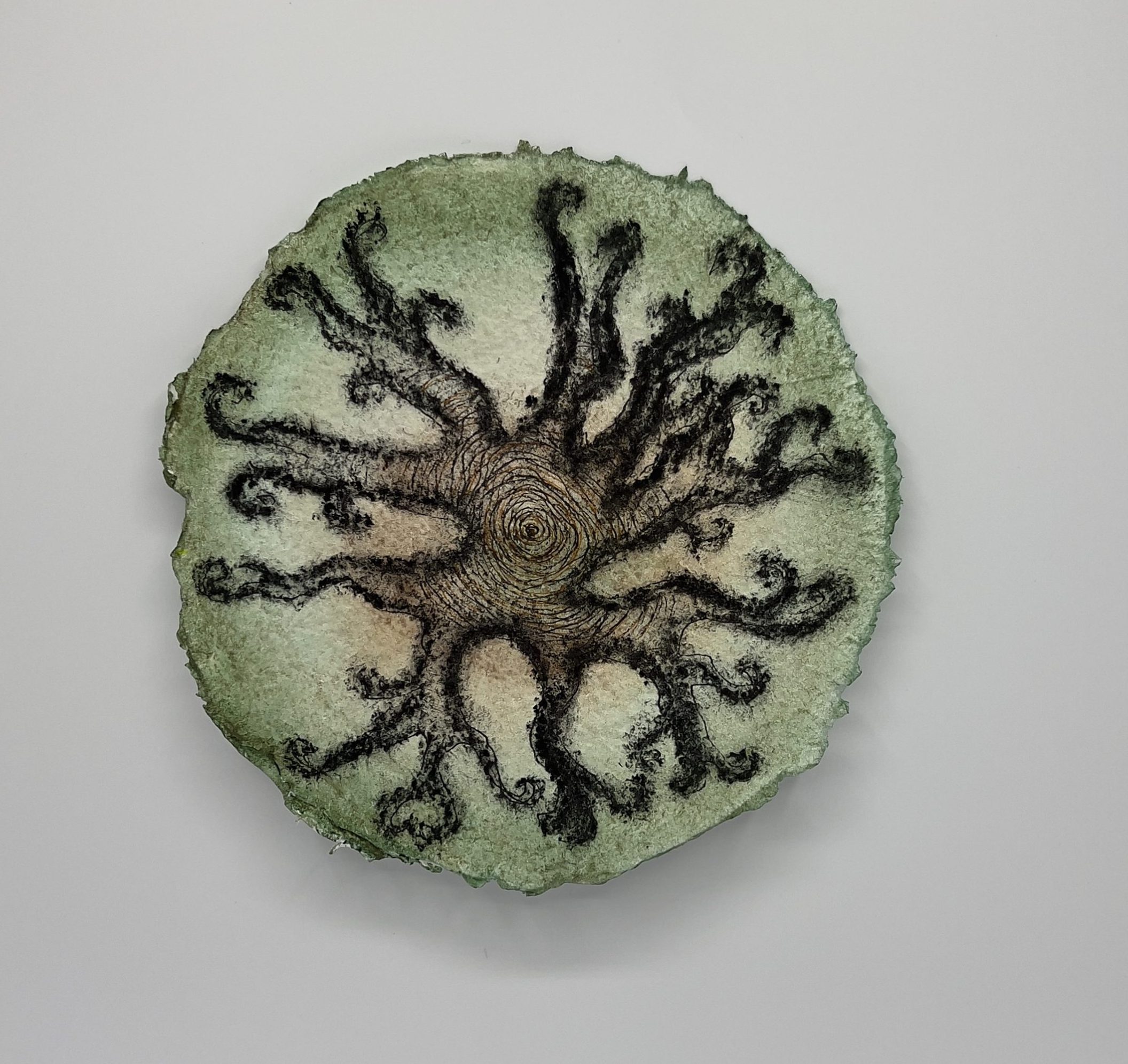
This eco-friendly mandala sketch was inspired by research supported by the United Nations, studying the ways in which global climate crises specifically affect our forests. Forests expand over 30% of Earth’s land surface, making a home for over 75% of land-living species, overall supporting 25% of humanity. More importantly, trees, the foundation of Earth’s forests, are one of the greatest natural ‘weapons’ to fight climate change. However, with mass levels of deforestation, caused both by climate change and human negligence, their role falls under threat.
Made with natural watercolor paints and homemade charcoal sticks, I composed this mandala on resourced watercolor paper. The particular pigments in the piece were derived from land of the Earth: bohemian green and dark red Moroccan ochre, and the charcoal sticks were a gift, carefully crafted from burning willow vines. Ergo, not only are these materials eco-friendly, but purposeful to this piece. I wanted to use Earth-found pigments simply to illustrate the natural colors of our planet’s forests and grounds. The use of charcoal was more deliberate, in which I wanted to convey the burning, ashy crisis of deforestation by forest fires, what better way than using a burnt piece of wood.
Spirals and Systems are important Eco Art aesthetics, so I highlighted them in the mandala. Branching from the center of the mandala is a spiraling tree root. Spirals can be subsequently seen as a matter of growth and evolution, as illustrated in the tree rings within the central ‘trunk.’ As for systems, the forest and even a tree in itself are considerable systems. Ultimately, this piece, along with its materials and aesthetics reflect both the fragility and resilience of Earth’s forests.
Introducing the 2020 D-Eco-Self Intern: Justin DeMattico is a studio art major pursuing his B.A. at Monmouth University. He has a background in all types of mediums including charcoal/graphite, clay sculpting, digital media, intaglio, and acrylic/oil paint to name a few but strongly prefers working in oils. A strong influence in some of his work is his faith and love for nature and animals. He is interested in the Discovering the Ecological Self project due to his interest in nature and how humans not only influence the world around them but interpret them through symbolism and alternative meanings. Due to the COVID-19 outbreak, DeMattico worked on the new D-Eco Self social media, merchandise and blog posts. In the future, DeMattico would like to become a professor at a university and help others discover and hone their love for art as well. Working with students like those from Aslan Youth Ministry on this project is beneficial in learning how to teach topics like these as well as bridging topics like the environment and art together in a classroom setting.
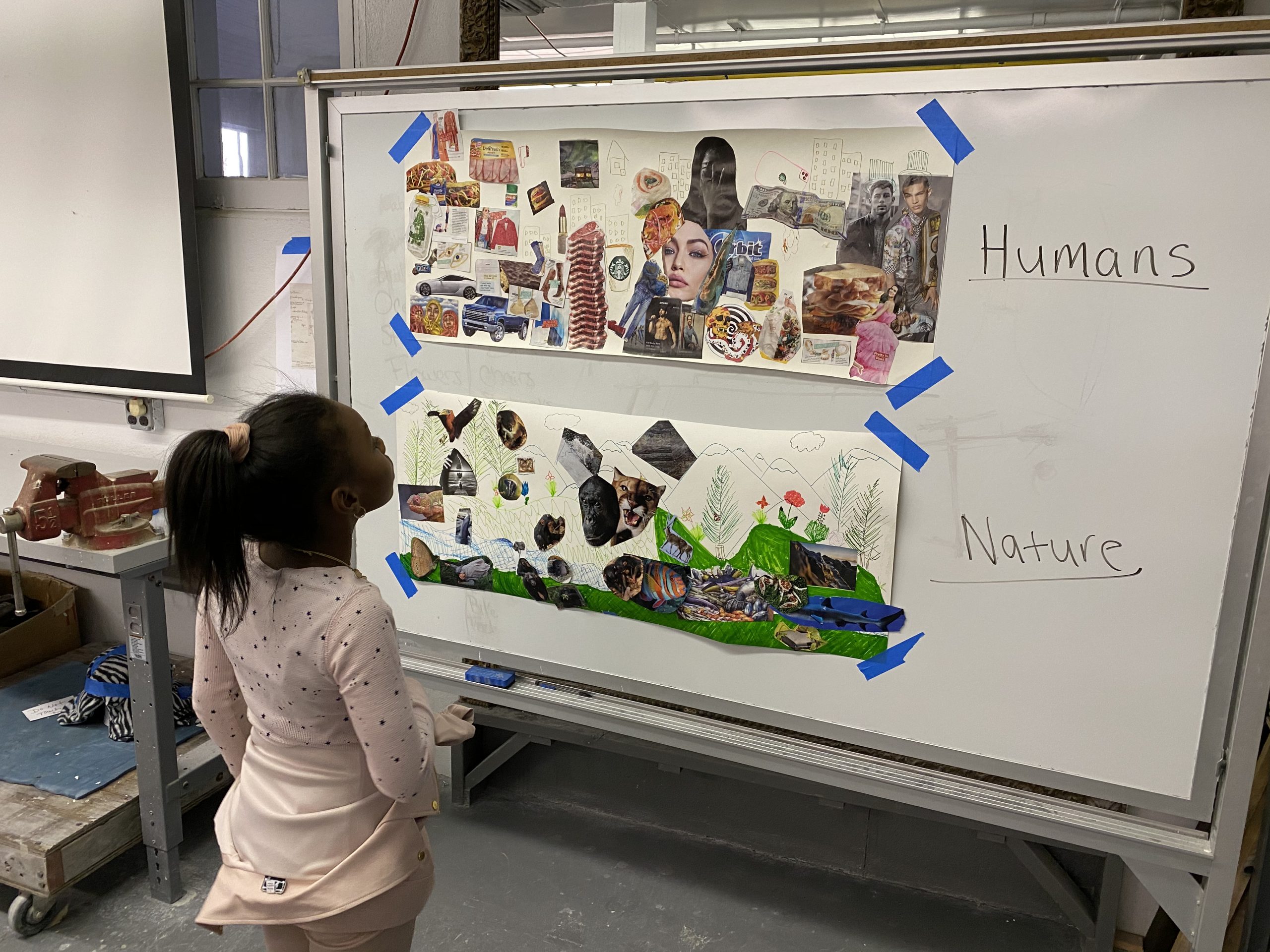
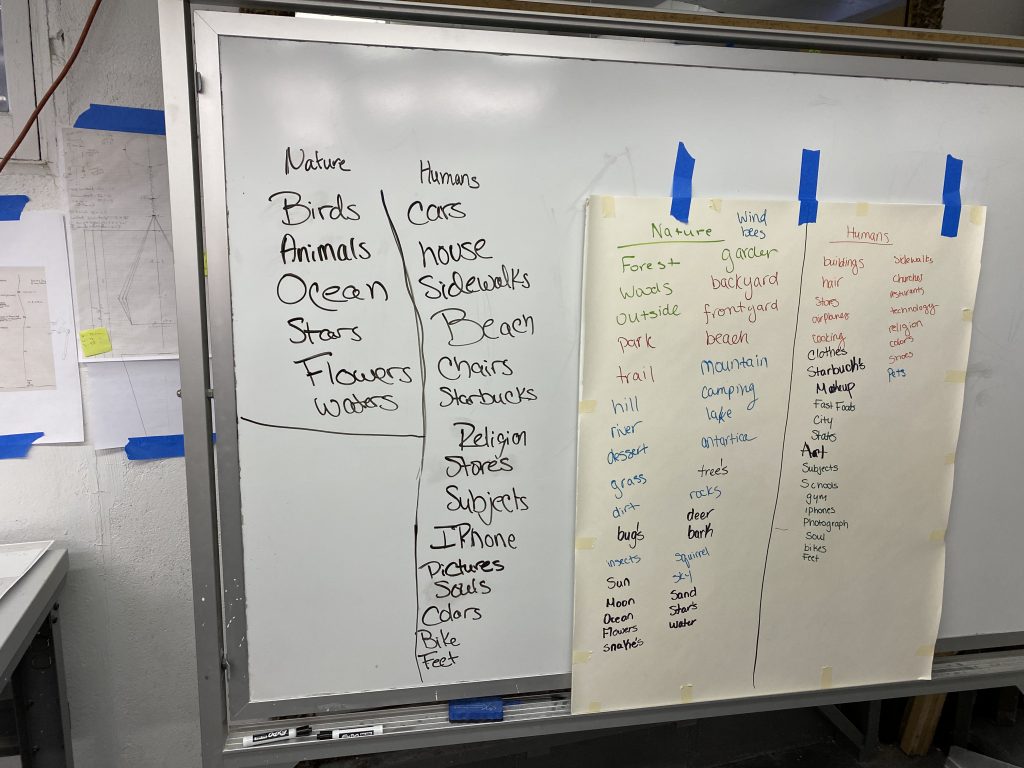
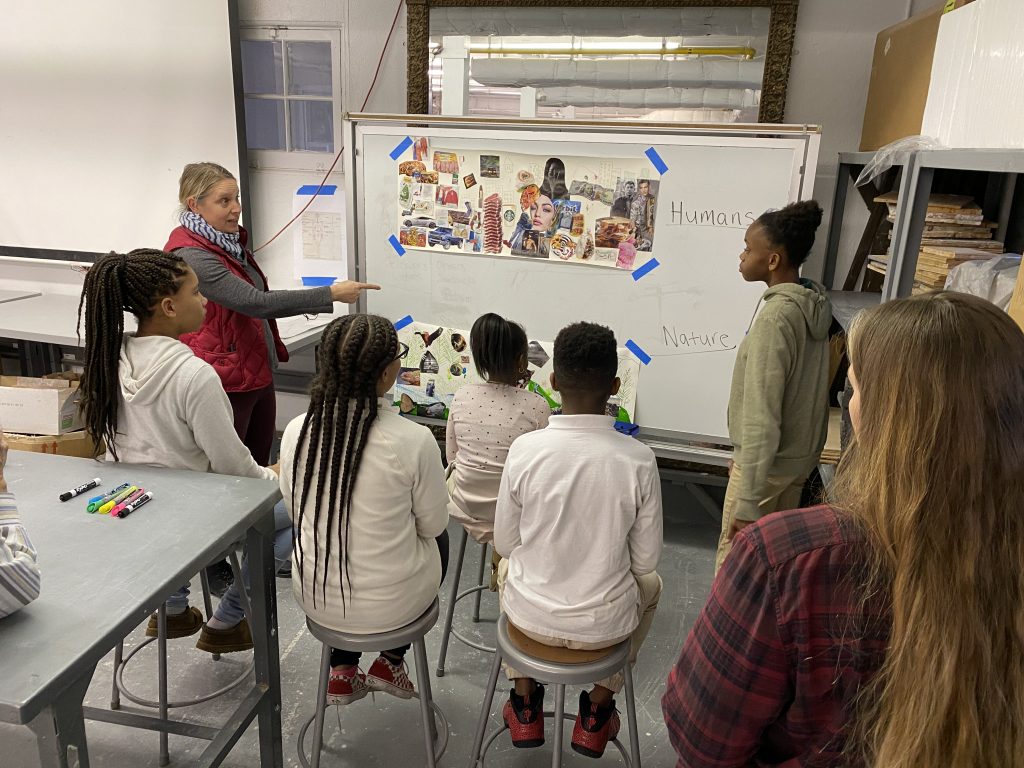
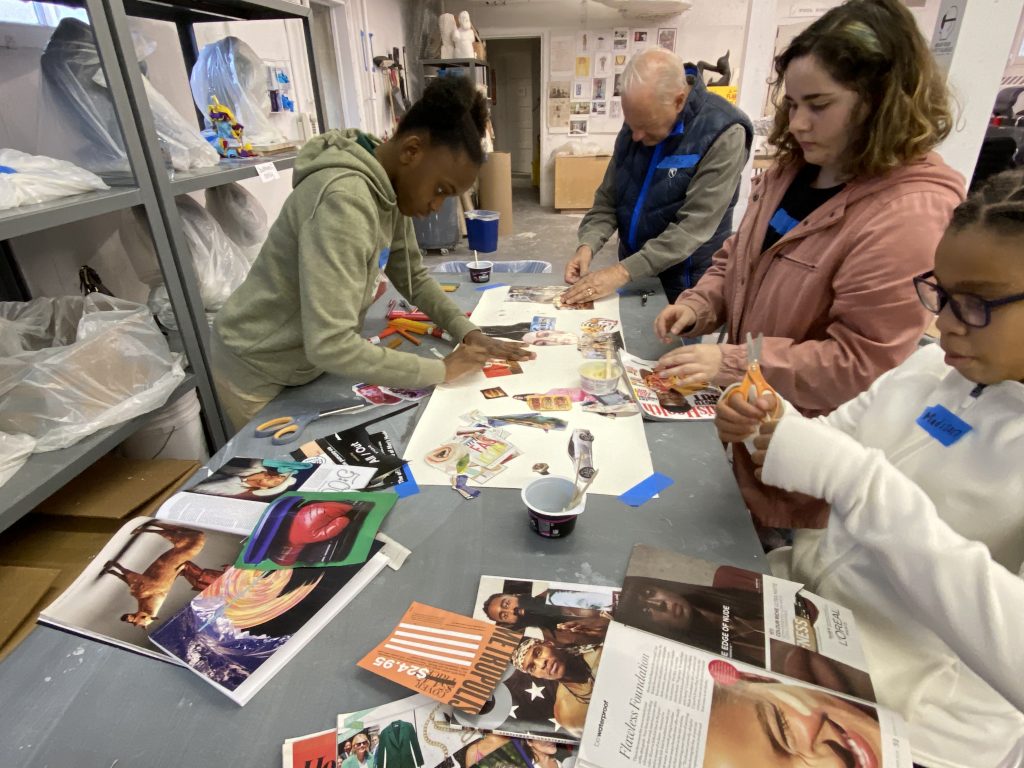
Each year, D-Eco-Self forms a collaboration between the Monmouth University Sculpture 2 students and the Aslan Youth Ministry ten to twelve year old group. Usually this is a series of 6-8 afternoon workshops that focus on a specific topic related to the Ecological Self. This year, Day 1 with Aslan Youth Ministry, we discussed humans and our relationship to nature. After being introduced to the project and the mission of Discovering the Ecological Self, both Monmouth and Aslan students gathered to come up with words that represented both nature and people. The goal of this exercise was to get all the participants thinking about what the distinctions between nature and our everyday lives were and if any, what overlaps there may be. There were many words brainstormed but a few stood out amongst the rest. On the nature side, students said words like sun, wind, bees, stars, etc. For the human column, one of the Aslan children said the word “subjects.” Other human words included makeup, buildings, religion and technology. The concept of subjects really jumped out from all the rest because subjects within learning are purely a mechanism of human thought, many aspects of learning overlap but humans separate them for ease of learning.
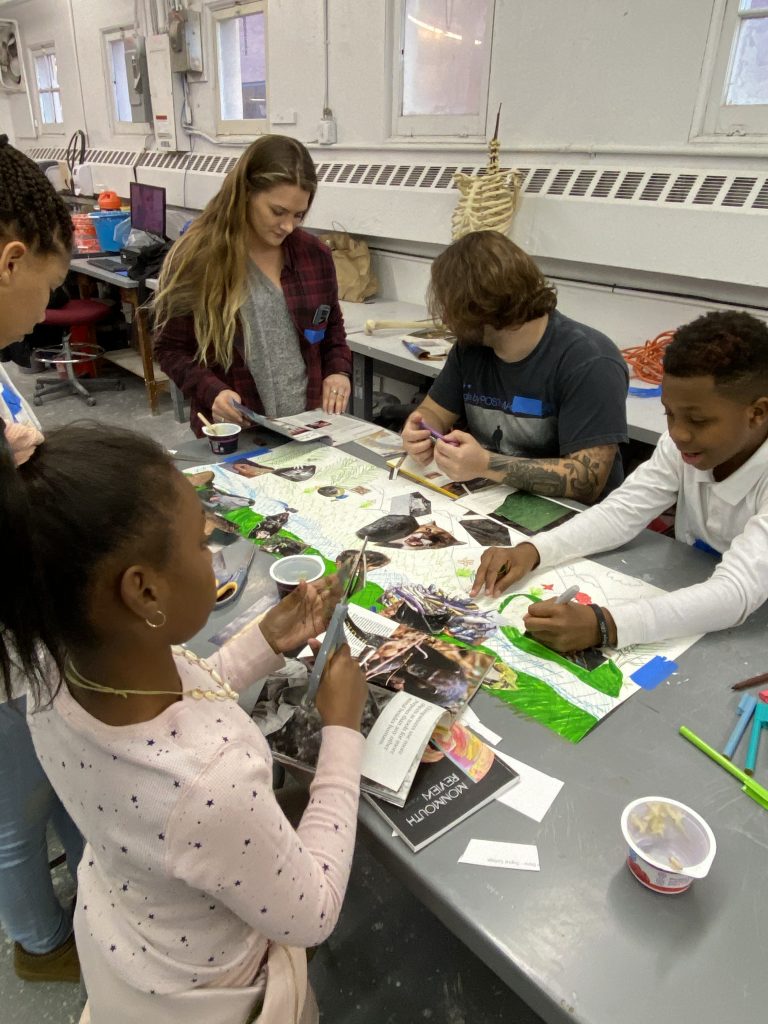
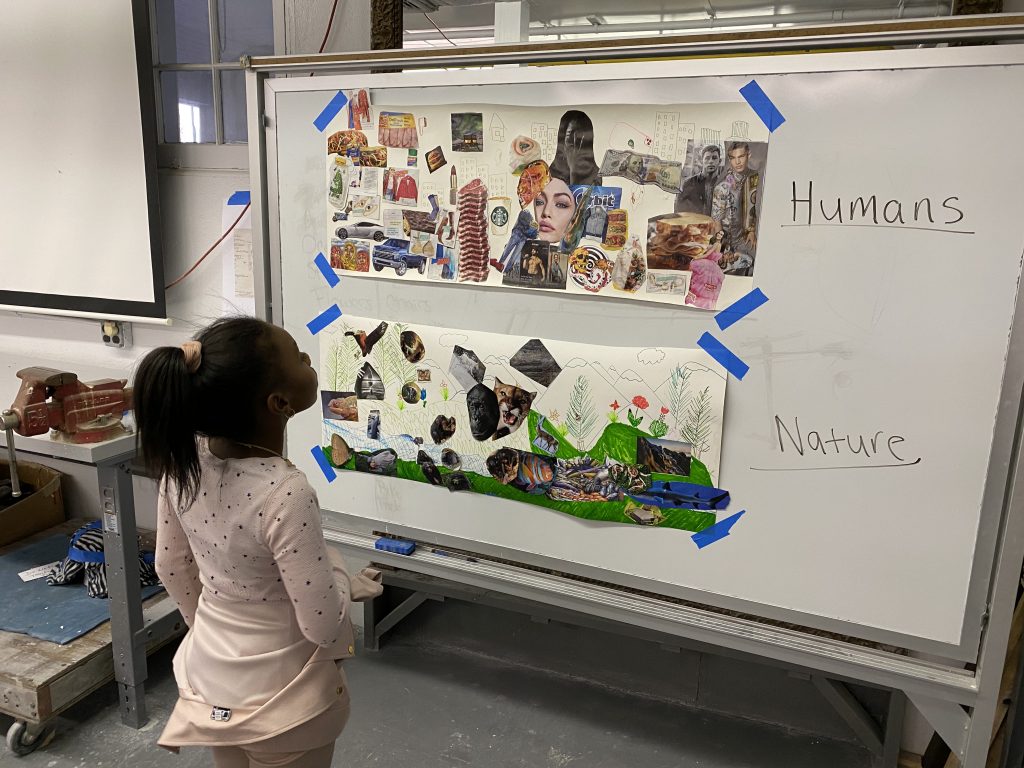
After this exercise, Aslan children were partnered up with Monmouth students to either create a large drawing/collage depicting these concepts of either nature or humans. The nature drawing depicted things like mountains, fish, large animals, and even lightening. The humans group had images such as cars, artwork, money, and jewelry. Pairing the two side by side after completion allowed everyone involved to view the distinct differences and come up with ways to bridge them together. One student proposed “planting grass, flowers, and trees on the tops of buildings.” Others wrote that we should stop pollution of our air and oceans, have teachers bring students outside for class, and set up animal sanctuaries within cities. To wrap up our first meeting, we all said one thing we learned today from our exploration of humans and nature. Aslan students had very interesting things to say. One of the girls said that animals are going extinct and that animals are not surviving well in cities as more expand. Some of the other students said that they were not going into nature enough and that there are more ways to get into nature than they originally thought.
Unfortunately, due to the COVID-19 outbreak in the United States this was the only session we were fortunate enough to have with the students. The university was promptly closed and for the safety of everyone, any further meetings with Aslan were not possible. The program will resume next spring 2021.
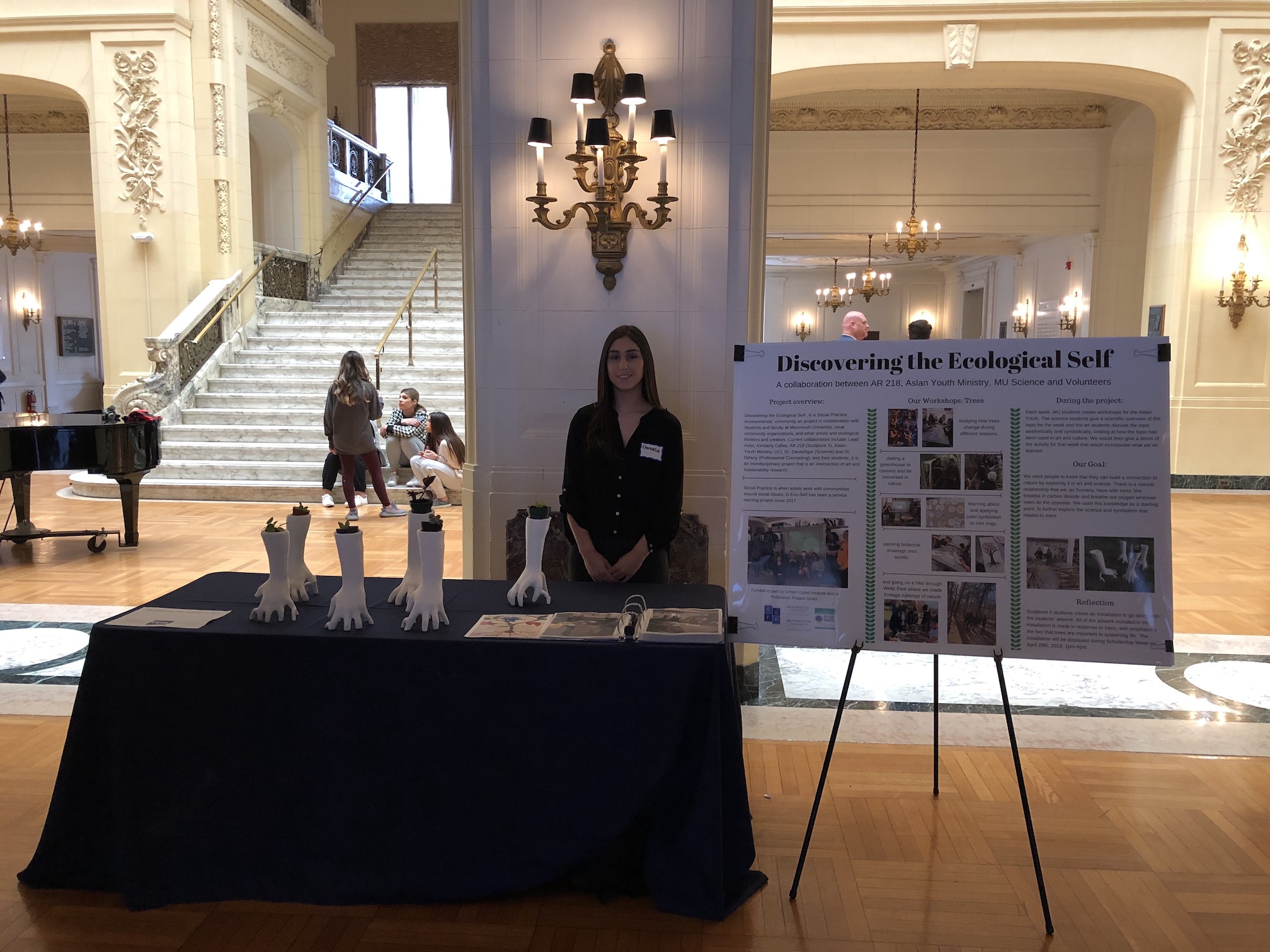
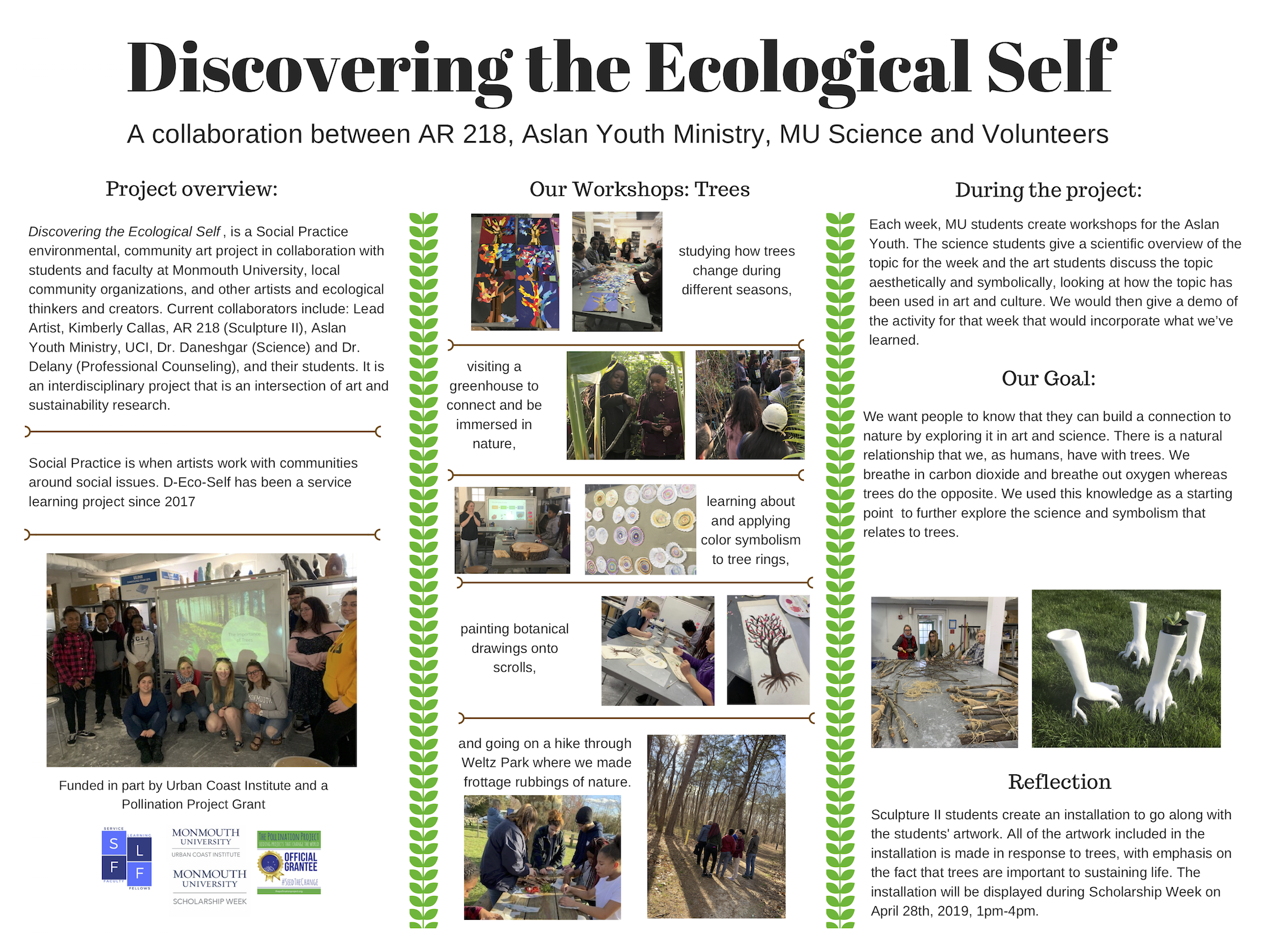
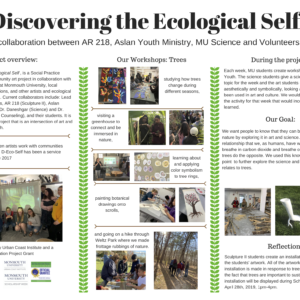
AR 218 Sculpture 2 Students participated in the 2019 Service Learning Scholarship Week Poster Session sharing their work about their D-Eco-Self collaboration project and artworks that they made with Aslan Youth Ministry and MU Science. Denice Michalchuk, our D-Eco-Self 2019 Research Assistant, created the poster, and Daniella Russo, our D-Eco-Self 2019 Project Assistant, presented to a packed crowd during the event.
To view pictures of images and artwork check out the gallery or read the blog posts!